

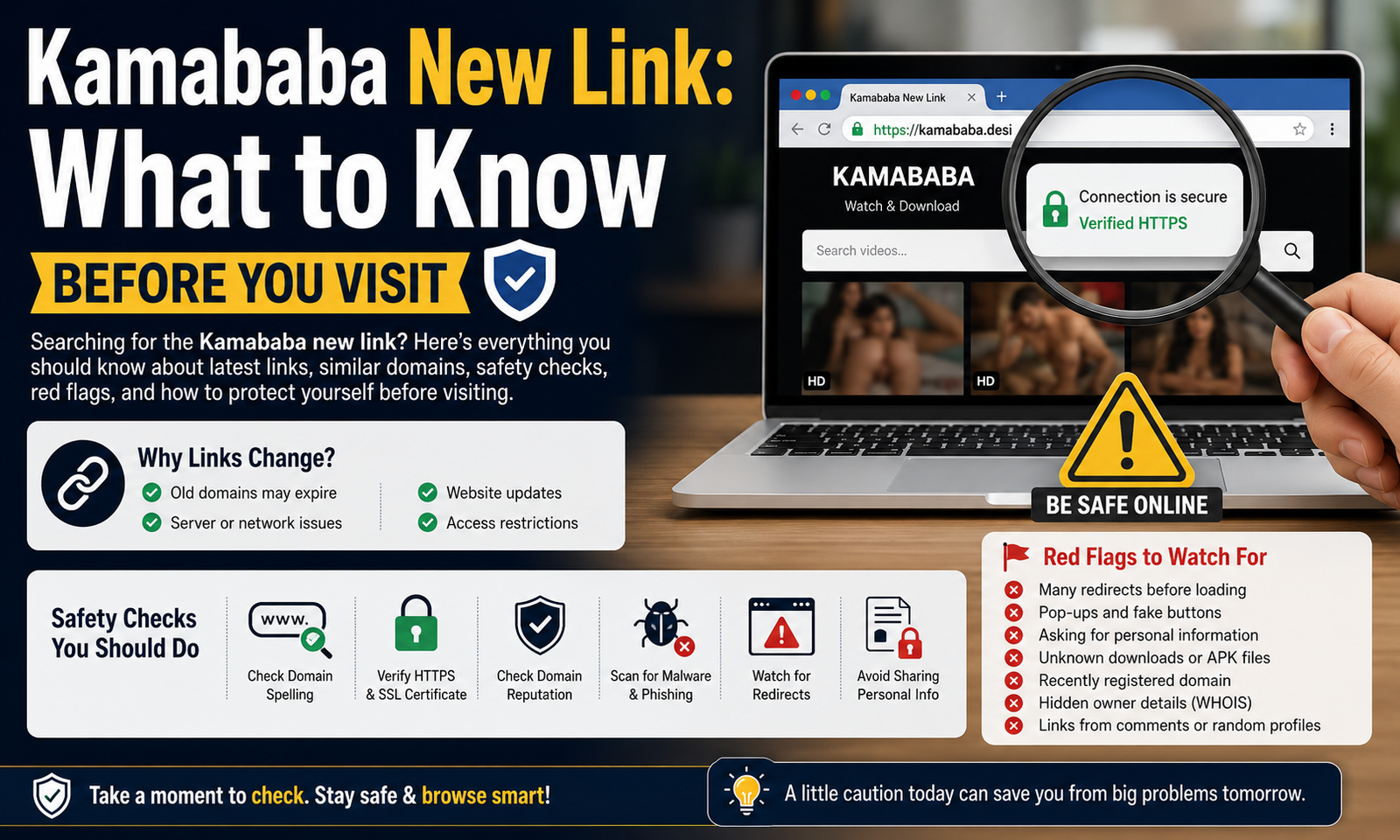
Many people search for the Kamababa new link because they are trying to find the latest working page, understand why an older link is not opening, or check whether a new domain is safe to visit. The problem is that searches around Kamababa can bring up different-looking websites, social media mentions, mirror-style pages, and links shared in comments or short videos. That can make it difficult for a normal user to know what is real, what is outdated, and what should be avoided.
Before opening any new Kamababa URL, it is better to slow down and check the basics. A website may look familiar, but that does not always mean it is official, safe, or trustworthy. Similar domains, redirects, pop-ups, and copied names are common across many online spaces, especially when a search term starts getting attention.
This guide explains what the Kamababa new link usually means, why different domains may appear, what safety checks you should make, and what warning signs should make you leave a page immediately. The goal is not to promote any specific website. It is to help users understand the topic clearly and browse with more care.
What Does “Kamababa New Link” Usually Mean?
When people search for Kamababa New Link: What to Know, they are usually looking for a fresh or updated way to access a Kamababa-related page. Sometimes, the old link may stop working. Sometimes, users may see a new domain shared on social media. In other cases, they may find several similar-looking results and not know which one to trust.
A Kamababa latest link can mean different things depending on the situation. It may be a changed domain, a mirror page, a redirected website, or simply a page using the Kamababa name to attract search traffic. This is why it is important not to assume that every result is the Kamababa official link.
The word “new” can also create confusion. A new link may be recent, but recent does not always mean safe. In fact, many risky pages online use fresh domains because they are easy to create and can appear quickly in search results or social media posts. A newly shared Kamababa website should always be checked before you open it, especially if it asks you to click through pop-ups, allow notifications, or download anything.
Why Users Search for Kamababa New Link
There are a few common reasons why people look for a Kamababa link update. The first reason is simple: an old page may no longer open. A user may have saved a link before, but when they try to visit it again, the page shows an error, redirects somewhere else, or does not load properly.
Another reason is domain confusion. Users may see different domain extensions, similar names, or alternative versions in search results. Some pages may include the Kamababa name with extra words, different endings, or slight spelling changes. For someone browsing quickly, these differences can be easy to miss.
Social media also plays a big role. A link mentioned in an Instagram reel, TikTok video, Telegram group, or random comment can spread fast. But a viral mention does not prove that a page is trustworthy. A Kamababa social media link may be outdated, copied, changed, or shared by someone who does not control the actual website.
That is why searches like Kamababa new website, Kamababa updated link, Kamababa current link, and Kamababa link not opening are common. Users want quick access, but quick access should not come before basic online safety.
Why There Are So Many Similar Kamababa Domains
One of the biggest issues with Kamababa-related searches is that users may come across many similar-looking domains. Some may use the exact name. Others may add extra words, different extensions, or local-style endings. This creates a situation where people are not sure whether they are visiting the same site, a copy, a mirror, or something completely separate.
A Kamababa mirror site is usually understood as a page that looks connected to the main name but may run on a different domain. Some mirror-style pages are created when websites change URLs, while others are made by unrelated people to capture traffic from users searching for a popular term.
This is why the full Kamababa domain matters. Do not only look at the title in search results. Check the actual URL in the browser bar. A fake or risky page can use a familiar title while the domain itself is different. Some sites also use small spelling changes that are easy to overlook.
For example, a copied domain might add an extra letter, replace a word, use a strange extension, or include hyphens. These small changes can make a fake Kamababa link appear close to the real thing at first glance. Before clicking, always check whether the domain spelling makes sense and whether the page looks consistent with what you expected.
Is the Kamababa New Link Official?
This is one of the most important questions, but it should be handled carefully. Unless ownership can be clearly verified, no one should casually claim that a random link is the Kamababa official link. A website can use the same name, similar branding, or familiar wording without proving that it is official.
A proper official domain usually has signs of consistency. It may have stable branding, clear contact details, a proper layout, working pages, and fewer suspicious redirects. But even then, users should stay careful. A clean-looking website can still behave badly if it pushes unsafe ads, downloads, or misleading buttons.
If you are trying to judge whether a Kamababa website is trustworthy, look for basic signals. Does the domain look normal? Does the page load directly? Are there too many redirects? Does it ask for personal details too quickly? Does it push notifications before showing any content? Does it open new tabs without permission?
A verified website should not make you feel rushed or trapped. If a page looks confusing, keeps sending you somewhere else, or hides the main content behind aggressive pop-ups, that is a sign to leave.
Safety Checks Before Visiting Any Kamababa Link
Before opening any Kamababa new link, there are a few simple checks that can help you avoid trouble. These checks do not take long, but they can protect your privacy, device, and personal information.
The first thing to check is the spelling of the domain. Many unsafe pages rely on users clicking too fast. Look closely at the full address. A similar URL is not always the same website. Extra words, odd extensions, spelling changes, and unnecessary symbols can all be signs of a copycat page.
Next, check whether the site uses HTTPS. A secure connection is better than an unsecured one, but this does not mean the website is automatically safe. A valid SSL certificate only shows that the connection between your browser and the website is encrypted. It does not prove that the website is official, honest, or free from risky content.
You should also use a website safety check when you are unsure. Online tools can help review domain reputation, possible phishing warning signs, malware reports, suspicious redirects, and other risk signals. These tools are not perfect, but they are useful when you want a quick second opinion before opening an unfamiliar page.
If a domain has a very low trust score, too many warnings, hidden ownership details, or a recent registration date, be more careful. None of these signals alone always prove a site is harmful, but several warning signs together should make you pause.
Warning Signs That Should Make You Leave
Some red flags are easy to spot once you know what to look for. If a Kamababa new link opens and immediately redirects several times, that is not a good sign. A normal page should not send you through multiple unknown domains before showing content.
Another warning sign is aggressive pop-ups. If the page opens new tabs, shows fake play buttons, asks you to allow browser notifications, or pushes you toward another website, leave the page. These tricks are often used to generate ad revenue, collect clicks, or lead users toward unsafe pages.
Be especially careful with downloads. If a page asks you to download an APK file, browser extension, media player, or unknown file, do not continue unless you fully trust the source. An unknown download can put your device at risk. This matters even more for mobile users, because Android APK files can be shared outside official app stores.
You should also avoid entering personal details. If a page asks for your email, phone number, password, payment details, or login information before showing basic content, treat it as a serious privacy risk. A search for a Kamababa latest link should never require you to give away sensitive information.
Other warning signs include broken pages, fake security alerts, strange ads, copied layouts, poor grammar, suspicious buttons, and browser warnings. If your browser says a page may be unsafe, do not ignore it.
Why a Kamababa Link May Not Be Working
A common search related to this topic is Kamababa not working or Kamababa link not opening. There are several reasons why this can happen, and not all of them mean the site has disappeared.
Sometimes, the old domain may have changed. Websites can move from one address to another, especially if the previous domain stopped working or was no longer being used. In other cases, a page may be temporarily down because of server issues, maintenance, or heavy traffic.
Your own browser may also be part of the problem. Old cache files, cookies, DNS issues, or a weak internet connection can stop a page from loading properly. Trying a different browser or clearing your cache may help, but only do this for websites you trust.
Location can also matter. Some pages may be blocked in certain regions or by certain networks. A page that opens for one person may not open for another. That is why users often search for Kamababa alternative link or Kamababa mirror link when the main page does not work.
However, be careful with alternative links. A link shared as a “working link” may not be official or safe. It is better to verify the full domain than to click the first result you see.
Mobile Users Should Be Extra Careful
Many users search for the Kamababa new link on their phones. Mobile browsing is convenient, but it also makes risky links harder to notice. On a small screen, the full URL may be hidden, pop-ups may cover the page quickly, and users may tap buttons without reading them properly.
With Kamababa mobile browsing, always check the browser address bar before interacting with the page. Avoid tapping random play buttons, download buttons, or permission pop-ups. Some websites use fake buttons that look like normal content but actually open ads or redirect you elsewhere.
Do not allow browser notifications unless you trust the website. Notification spam can become annoying and may lead you back to questionable pages later. If a website asks for notification permission before you even understand what it offers, that is a red flag.
Mobile users should also avoid installing unknown APK files. If a page says you must install an app to continue, treat that request with caution. A normal website should not force you into an APK download warning situation. Keep your browser updated, use built-in security settings, and leave any page that behaves aggressively.
What Safety Scanners Can Show
A domain reputation check can help you understand whether a website has known risk signals. These tools may look at things like malware reports, phishing history, suspicious redirects, domain age, server behavior, and whether the site appears in known blocklists.
For a Kamababa-related domain, a scanner may show clean results on one day and different results later. That is because websites can change. A page might be clean during one scan but later add new ads, redirects, scripts, or files. This is why safety tools should be treated as helpful checks, not final proof.
When using a URL scanner, look for signals such as malware detection, phishing detection, domain reputation, WHOIS privacy, and redirect behavior. If a tool says the site is low risk, that is useful, but you should still browse carefully. If multiple tools show warnings, it is better not to open the page.
Also remember that hidden WHOIS details are common on many websites and do not always mean something is wrong. But when hidden ownership appears together with recent registration, low trust score, many redirects, and aggressive pop-ups, the risk becomes more serious.
Social Media Links Can Be Misleading
Instagram, TikTok, short videos, and comment sections can make a Kamababa new link spread quickly. Someone may post a reel or video mentioning a link, and viewers may start searching for it immediately. But social media mentions are not the same as verification.
A link in bio can be changed at any time. A comment can be posted by anyone. A short video may be old, edited, or unrelated to the actual website. This means a viral link should never be trusted only because it is popular.
Be especially careful with shortened links. A shortened URL hides the final destination, so you do not know where it will take you until after you click. If someone shares a shortened Kamababa link update, it is better to avoid it or check it through a safe URL expander first.
Copycat pages often use social media traffic because users are more likely to click quickly on their phones. If a link comes from an unofficial profile, random comment, or unknown account, treat it as an unverified source.
How to Search for the Kamababa New Link Safely
The safest way to search for the Kamababa latest link is to be patient and compare information. Do not open the first result just because it appears at the top or uses the right words in the title.
Start by searching the name carefully. Look at more than one result. Compare the domain names. Check whether the same domain appears consistently or whether you are seeing many unrelated versions. If several sites use similar wording but different domains, that is a sign to be more cautious.
Before opening a page, copy the domain and check it through a domain checker or website safety checker. Look for any clear warnings. If the page has reports of malware, phishing, suspicious redirects, or unsafe downloads, avoid it.
When you do open a page, watch how it behaves. A safer page should load clearly without forcing permissions, downloads, or multiple redirects. If you see browser warnings, fake buttons, adult pop-ups, or unknown file prompts, close the tab.
Safe searching is not about being scared of every website. It is about not trusting every new Kamababa URL blindly.
What Not to Do Before Visiting a New Link
There are a few things users should avoid when dealing with any Kamababa new website or similar domain.
Do not enter passwords or personal information on a page you have not verified. Even if the page looks familiar, you should not give away login details, phone numbers, or payment information unless you fully trust the domain.
Do not download unknown files. A page may claim that you need an app, video player, update, or plugin to continue. This is a common trick used by unsafe websites. If you did not go there looking for a trusted download, do not install anything.
Do not allow notifications from a suspicious page. Browser notification spam can keep sending unwanted alerts even after you leave the site. If you already allowed notifications by mistake, remove that permission from your browser settings.
Do not ignore redirects. If you click a Kamababa current link and it sends you through several unrelated websites, that is a strong sign that something may not be right. Close the tab and avoid interacting further.
Do not assume HTTPS means the site is official. It only protects the connection. It does not guarantee honest ownership, safe content, or clean advertising behavior.
How to Tell If a Kamababa Domain Looks More Trustworthy
A more trustworthy Kamababa domain usually behaves in a stable and predictable way. It loads directly, uses clear navigation, avoids aggressive pop-ups, and does not push unknown downloads. It also does not force users to share personal information before showing basic content.
The domain spelling should be clean and easy to understand. If the URL looks messy, includes random characters, or uses a strange extension with copied branding, be cautious. A trustworthy page should not rely on confusion to get clicks.
Look for signs of normal website ownership, such as a contact page, privacy information, terms page, or clear branding. These things are not perfect proof, but their absence can make a website look less reliable.
A good Kamababa site check should include both technical signals and common sense. If safety scanners look fine but the website behaves badly, trust what you see. If a page feels unsafe, leave it.
Kamababa New Link Checklist Before You Visit
Before visiting any Kamababa new link, use this simple checklist in your mind.
Check whether the Kamababa domain is spelled correctly. Look at the full URL, not just the page title. Make sure there are no strange additions, misspellings, or confusing extensions.
Check whether the site uses HTTPS, but remember that HTTPS alone does not prove the site is official. It is only one safety signal.
Watch for redirects. If the page jumps through several websites before loading, that is a warning sign. A clean website should not send users through unknown pages without a clear reason.
Use a website safety checklist or online scanner if you are unsure. Check for domain reputation, malware warnings, phishing reports, and suspicious behavior.
Avoid downloads, notification requests, and personal information forms. A page that immediately asks for permissions or pushes files should not be trusted.
Pay attention to how the page feels. Too many pop-ups, fake buttons, broken layouts, and aggressive ads are signs of a risky website. If something feels wrong, close the page.
The main thing to remember is simple: a Kamababa updated link should be checked before it is trusted. Whether you find it through search, social media, a comment, or a shared message, take a moment to verify the domain and protect your device.
