Kamababa: A Complete Guide to Safe, Simple, and Responsible Browsing
This guide is written to give visitors a complete overview of Kamababa in a clean and responsible way. It explains what users should know before visiting, how to think about safety, why privacy matters, what signs of trust to look for, and how to avoid common problems that can appear on similar online platforms.
Kamababa should be approached with awareness. Any website that deals with mature browsing, third-party links, media pages, redirects, or user-driven traffic needs to be handled carefully. A smart visitor does not click blindly. A smart visitor checks the page, understands the risks, protects personal information, and only continues when the browsing experience feels safe and transparent.
This page is built as an independent informational resource. It is not here to confuse users or make exaggerated claims. Its purpose is simple: to help visitors understand Kamababa better and browse with more confidence.
What Is Kamababa?
Kamababa can be understood as an online destination that visitors associate with mature digital browsing and quick access to content. Like many websites in this category, it attracts users who prefer simple navigation, fast loading, and a direct path to the material they are looking for. The appeal usually comes from convenience. People want a platform that does not feel complicated or overloaded with unnecessary steps.
However, convenience should never replace caution. A website can be easy to open but still require careful use. Visitors should always pay attention to how the page behaves, how many redirects appear, whether the website looks secure, and whether anything feels suspicious. A clean browsing experience should feel smooth, not forced.
Kamababa is best understood through three important points: access, safety, and responsibility. Access means visitors want the site to open properly and work without confusion. Safety means users should protect their device, browser, and personal data. Responsibility means users should avoid harmful, illegal, non-consensual, or inappropriate material.
A mature online platform should never be treated casually. Even if a visitor is familiar with the name, it is still important to check the website carefully every time. Domains can change, copycat pages can appear, and unsafe versions can mislead users. That is why a thoughtful guide matters.
Why Kamababa Attracts Attention
Kamababa attracts attention because it appears to offer a straightforward browsing experience. Many users prefer platforms that do not require long signups, complicated menus, or confusing navigation. The simpler a site feels, the more likely visitors are to return to it.
But simplicity alone is not enough. A good online experience should also feel stable, respectful, and secure. Visitors should not have to deal with endless popups, forced downloads, fake buttons, or misleading redirects. When those problems appear, trust starts to disappear.
The attention around Kamababa also comes from familiarity. Once a name becomes known online, people begin to remember it and return to it. That familiarity can be useful, but it can also attract imitation pages. Some websites may try to use similar names, similar designs, or confusing layouts to pull in traffic. This is why users should always look carefully at the page they are visiting instead of assuming every similar-looking website is trustworthy.
A responsible visitor should treat Kamababa the same way they would treat any other mature online platform. Check the basics. Look at the URL. Avoid suspicious downloads. Do not enter personal information unless there is a clear and trustworthy reason. Leave immediately if the page behaves strangely.
A Better Way to Understand Kamababa
The best way to understand Kamababa is not to think of it only as a destination. It should also be seen as a browsing environment. That means the visitor experience depends on many things: the domain being used, the page layout, the device, the browser, the internet connection, and the safety habits of the person using it.
A website may work well for one visitor and poorly for another. One person may open it from a desktop browser with no issue, while another may face redirects or loading problems on mobile data. Sometimes the problem is not the main website itself but the browser cache, network restrictions, regional blocks, or clone pages.
This is why visitors should avoid panic when a page does not work. Instead of clicking random links, they should first check simple things. Refresh the browser. Clear old data. Try a safer browser. Check whether the page is loading through a secure connection. If the page forces downloads or shows strange alerts, close it.
Kamababa should be used with a calm and careful approach. The goal is not just to reach a page. The goal is to browse without exposing personal information, device security, or privacy.
The Importance of Safe Access
Safe access is one of the most important parts of using Kamababa or any similar platform. Many visitors focus only on whether a page opens, but that is not enough. A page can open and still be unsafe. A page can load quickly and still contain misleading buttons, aggressive ads, or harmful redirects.
A safer experience begins with checking the address bar. Visitors should make sure the page uses HTTPS and that the domain looks correct. A secure connection does not make every website perfect, but it is one basic sign that the page is using standard protection.
The next thing to watch is behavior. A trustworthy page should not force users to install unknown files. It should not demand strange permissions. It should not lock the screen with fake warnings or push visitors into clicking buttons that do not make sense. If a website claims that a video, page, or feature requires an unknown app, that should be treated with caution.
Visitors should also avoid browser notification traps. Some websites ask users to “allow” notifications before showing content. This can lead to unwanted alerts, spammy messages, or misleading prompts later. Unless there is a clear reason to allow notifications, it is better to deny them.
Safe access is not about fear. It is about control. Users should remain in control of the page, the browser, and the device. If Kamababa or any related page feels like it is taking control away from the visitor, the safest choice is to leave.

Privacy Matters More Than Most Users Think
Privacy is one of the biggest concerns when browsing mature online content. Many users underestimate how much information can be exposed through careless browsing. A website may not ask for a name or email address, but browsing activity can still reveal device details, location signals, browser type, and behavior patterns.
Visitors should avoid sharing personal data on platforms where they do not fully understand the privacy practices. This includes names, email addresses, phone numbers, payment information, social media accounts, or login details. If a page suddenly asks for personal information without a strong reason, that is a warning sign.
Kamababa visitors should also be careful with saved browser data. If a shared device is being used, clearing history and cache may be important. Private browsing can offer a cleaner session, although it does not make a user invisible. It mainly helps prevent local browsing history from being stored on the device.
Another privacy concern is third-party advertising. Some platforms use ads that lead away from the main page. Not all ads are dangerous, but some can be misleading. Visitors should avoid clicking banners that promise unrealistic features, fake downloads, or urgent warnings.
Good privacy habits are simple but powerful. Do not share unnecessary information. Do not install unknown files. Do not allow random permissions. Do not trust every button on the page. These habits can make the difference between a normal browsing session and a risky one.
Responsible Browsing and User Awareness
Responsible browsing is not only about device safety. It is also about ethics and legality. Mature content should always involve adults, consent, and lawful distribution. Visitors should avoid any material that appears exploitative, illegal, private, leaked, abusive, or non-consensual.
If a page contains content that looks harmful or unlawful, users should not engage with it. They should leave the page and, where possible, report the content through the proper channel. A responsible platform should provide a way for content concerns to be reported.
Kamababa should be approached with this same standard. Visitors should not support or continue viewing anything that raises serious ethical concerns. The internet can make content feel distant, but real people may be affected by what is shared online. Respect, consent, and legality matter.
Responsible browsing also includes age awareness. Mature platforms are intended only for adults. Anyone under the legal age should not access adult material. Websites in this space should clearly communicate that they are for adult audiences only, and users should respect those boundaries.
A professional approach to Kamababa means more than describing access. It means encouraging safer and more responsible behavior. A visitor who understands these principles is less likely to fall into risky or harmful browsing patterns.
Common Problems Visitors May Face
Like many online platforms, Kamababa may not always work perfectly for every visitor. Some users may experience slow loading, blank pages, redirects, blocked access, or mobile issues. These problems can happen for many reasons, and they do not always mean the platform itself has disappeared.
A slow page may be caused by heavy traffic, server issues, large media files, or a weak internet connection. A blocked page may be caused by regional restrictions, internet provider filtering, or browser security settings. A redirect may happen because of advertising networks, outdated links, or copycat pages.
Mobile users may face different issues than desktop users. Smaller screens, mobile browser limitations, data restrictions, or aggressive popups can make browsing more difficult. If the page does not behave properly on mobile, trying an updated browser may help. However, users should never install unknown apps just because a page asks them to.
Another common problem is confusion caused by similar-looking domains. Visitors may think they are on Kamababa when they are actually on another page using a similar name or style. This can lead to privacy risks, fake buttons, or poor-quality browsing. The safest habit is to look carefully before interacting with the page.
When problems happen, the best response is patience and caution. Do not rush into clicking random alternatives. Do not trust every “working” claim. Do not download unknown files. A few careful checks can prevent bigger issues.
How to Recognize a More Trustworthy Page
A trustworthy page usually feels organized, clear, and predictable. It does not need to overwhelm visitors with flashing buttons or confusing popups. It should load cleanly, show clear navigation, and avoid forcing unnecessary actions.
One sign of trust is transparency. A serious website should have basic pages such as privacy information, terms, contact details, and a content removal or reporting process. These pages show that the site is not trying to hide completely from users.
Another sign is behavior. A better page does not repeatedly push users through redirects before showing content. It does not trick users into clicking fake play buttons. It does not force browser notifications. It does not ask for device permissions that have nothing to do with browsing.
Design also matters. While a simple design is not proof of safety, a messy page filled with misleading elements can be a warning sign. Visitors should trust their judgment. If the page feels aggressive, deceptive, or unstable, leaving is the right decision.
Kamababa can build stronger trust when it is presented with clarity, safety information, and responsible guidance. A homepage should not only attract visitors. It should help them understand what to expect and how to protect themselves.
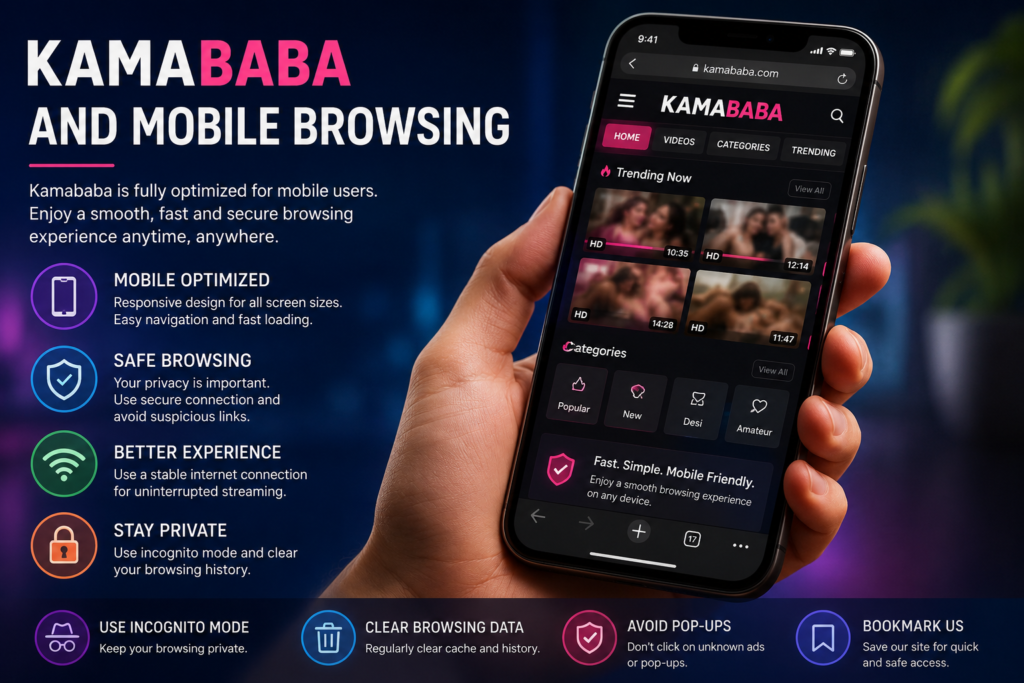
Kamababa and Mobile Browsing
Mobile browsing is now one of the most common ways people access online platforms. For Kamababa, a mobile-friendly experience is important because users often expect fast loading and simple navigation from their phones.
A good mobile experience should be clean. Menus should be easy to tap. Pages should not shift suddenly. Buttons should be clear. Popups should not cover the entire screen. Visitors should be able to leave a page easily without feeling trapped.
Mobile safety is especially important because phones often contain personal photos, contacts, messages, banking apps, and private accounts. Installing unknown files on a phone can be more dangerous than many users realize. That is why Kamababa visitors should be careful with any page that pushes app downloads, APK files, or strange permission requests.
If a mobile page is not opening properly, visitors should first check basic settings. Updating the browser, clearing cache, or switching networks may solve some issues. But if the page continues to behave strangely, it is better to stop using it rather than forcing access through unsafe methods.
Kamababa should be experienced in a way that feels easy and controlled. If mobile browsing feels chaotic, full of redirects, or difficult to exit, the visitor should take that seriously.
The Role of Clear Information
Clear information is valuable because it reduces confusion. Many websites in mature niches rely on vague claims, aggressive headlines, and unclear buttons. That style may attract clicks, but it does not build long-term trust.
A better Kamababa guide should explain things plainly. What should visitors expect? What should they avoid? How can they protect their privacy? What signs suggest that a page may be unsafe? These questions matter because they help visitors make better decisions.
Clear information also helps separate responsible guidance from misleading promotion. A page that only pushes users to click without explaining safety is not serving the visitor well. A page that explains risks, privacy, and responsible use is more useful.
Kamababa can become more understandable when the homepage is written in a calm, editorial style. The tone should not sound like a machine or a spam page. It should sound like a real guide written for real people.
That means using natural paragraphs, honest explanations, and practical advice. Visitors should feel that the page respects their time and intelligence.
Why a Clean Homepage Matters
The homepage is often the first impression. For Kamababa, that first impression should be simple, professional, and easy to understand. A cluttered homepage can make users uncomfortable. A clean homepage gives them a better reason to stay.
A strong homepage should introduce Kamababa clearly without overloading the reader. It should explain the purpose of the site, provide safety guidance, and help visitors understand how to browse responsibly. It should also make trust pages easy to find.
The homepage should not feel like a list of repeated phrases. It should feel like a complete editorial guide. Visitors should be able to read it and understand the platform without needing to jump between multiple pages.
A good structure also helps users move naturally through the site. If someone wants safety information, they should find it easily. If someone wants help with access issues, that section should be clear. If someone wants to learn how to avoid unsafe pages, the guidance should be visible.
Kamababa can benefit from a homepage that feels more like a trusted guide than a random landing page. That difference matters, especially in a niche where visitors are often cautious.
Building Trust Around Kamababa
Trust is not created by a name alone. It is built through consistency, clarity, and responsible presentation. If visitors feel misled, they leave. If they feel respected, they are more likely to return.
For Kamababa, trust can be strengthened by keeping the homepage honest and useful. The site should not pretend to be something it is not. It should not make unrealistic promises. It should not push visitors into risky actions. Instead, it should explain the browsing experience clearly and encourage safe behavior.
Trust also comes from proper policy pages. A privacy policy tells visitors how information may be handled. Terms explain the rules of use. A contact page gives users a way to reach the site. A reporting page gives people a path to flag harmful or illegal material. These pages are not just formal details. They show that the site takes responsibility seriously.
Another part of trust is regular maintenance. Broken links, outdated pages, and confusing redirects can make a site feel abandoned. A reliable Kamababa resource should be reviewed and updated so visitors receive current and useful information.
When trust becomes part of the site’s identity, the entire browsing experience improves.
What Visitors Should Avoid
Visitors using Kamababa or any similar platform should avoid certain risky behaviors. The first is downloading unknown files. If a page claims that content cannot be viewed without installing something, that should be treated carefully. Most normal browsing should not require unknown apps or extensions.
The second is allowing random notifications. Browser notifications can become annoying or misleading if they are abused. Visitors should only allow notifications from websites they fully trust.
The third is clicking every button on the page. Some websites use fake buttons that look like play icons, download links, or security prompts. These buttons may lead to unrelated pages or unsafe content. Visitors should pause before clicking.
The fourth is sharing personal information. A mature browsing platform should not need unnecessary personal details for casual browsing. If a site asks for information that feels unrelated, users should leave.
The fifth is ignoring uncomfortable content. If a page appears to host harmful, private, or non-consensual material, the responsible choice is to exit and report it where possible.
Avoiding these risks does not require technical knowledge. It only requires attention and good judgment.
Kamababa as a Responsible Browsing Resource
Kamababa can be presented as more than a name. It can be built into a responsible browsing resource that helps visitors understand access, safety, privacy, and ethical use. That approach is stronger than simply creating a page with repeated phrases or thin content.
A responsible resource gives visitors value. It answers questions without sounding forced. It explains risks without creating fear. It offers guidance without pushing unsafe behavior. It respects adult users while also setting clear boundaries.
This style of content is especially important for mature online spaces. Visitors may arrive quickly, but the page should still give them useful information. A calm and professional tone can make the site feel more serious and trustworthy.
Kamababa can stand out when the content is written like an editorial guide rather than a low-quality landing page. The goal should be to help, not just capture attention.
Final Thoughts on Using Kamababa Safely
Kamababa should be approached with awareness, privacy, and responsibility. Visitors should understand that safe browsing is not automatic. It depends on the page they visit, the device they use, the links they click, and the information they choose to share.
A better experience begins with simple habits. Check the page before interacting. Avoid forced downloads. Do not share private information. Be careful with redirects. Use updated browsers. Respect adult-only boundaries. Avoid harmful or illegal content. Leave any page that feels unsafe.
The purpose of this guide is to make Kamababa easier to understand in a professional and responsible way. Instead of treating it as just another page to open, visitors should think about the full browsing experience. Is it clear? Is it safe? Is it respectful? Does it protect privacy? Does it avoid misleading behavior?
When users ask these questions, they make better choices. Kamababa can be part of a safer browsing experience when visitors stay alert and the platform is presented with honesty, clarity, and responsibility.
Kamababa is ultimately about more than access. It is about how people move through the web, how they protect themselves, and how they choose platforms that respect trust and safety. A clean, thoughtful, and well-written homepage can help shape that experience from the very first visit.
Kamababa is a name many visitors recognize because it has become associated with fast access, simple browsing, and a direct online experience. In a digital space where users often move quickly from one platform to another, the value of a clear and reliable guide cannot be ignored. People do not just want a page that loads. They want a place that feels understandable, easy to navigate, and safer to use.
This guide is written to give visitors a complete overview of Kamababa in a clean and responsible way. It explains what users should know before visiting, how to think about safety, why privacy matters, what signs of trust to look for, and how to avoid common problems that can appear on similar online platforms.
Kamababa should be approached with awareness. Any website that deals with mature browsing, third-party links, media pages, redirects, or user-driven traffic needs to be handled carefully. A smart visitor does not click blindly. A smart visitor checks the page, understands the risks, protects personal information, and only continues when the browsing experience feels safe and transparent.
This page is built as an independent informational resource. It is not here to confuse users or make exaggerated claims. Its purpose is simple: to help visitors understand Kamababa better and browse with more confidence.
What Is Kamababa?
Kamababa can be understood as an online destination that visitors associate with mature digital browsing and quick access to content. Like many websites in this category, it attracts users who prefer simple navigation, fast loading, and a direct path to the material they are looking for. The appeal usually comes from convenience. People want a platform that does not feel complicated or overloaded with unnecessary steps.
However, convenience should never replace caution. A website can be easy to open but still require careful use. Visitors should always pay attention to how the page behaves, how many redirects appear, whether the website looks secure, and whether anything feels suspicious. A clean browsing experience should feel smooth, not forced.
Kamababa is best understood through three important points: access, safety, and responsibility. Access means visitors want the site to open properly and work without confusion. Safety means users should protect their device, browser, and personal data. Responsibility means users should avoid harmful, illegal, non-consensual, or inappropriate material.
A mature online platform should never be treated casually. Even if a visitor is familiar with the name, it is still important to check the website carefully every time. Domains can change, copycat pages can appear, and unsafe versions can mislead users. That is why a thoughtful guide matters.
Why Kamababa Attracts Attention
Kamababa attracts attention because it appears to offer a straightforward browsing experience. Many users prefer platforms that do not require long signups, complicated menus, or confusing navigation. The simpler a site feels, the more likely visitors are to return to it.
But simplicity alone is not enough. A good online experience should also feel stable, respectful, and secure. Visitors should not have to deal with endless popups, forced downloads, fake buttons, or misleading redirects. When those problems appear, trust starts to disappear.
The attention around Kamababa also comes from familiarity. Once a name becomes known online, people begin to remember it and return to it. That familiarity can be useful, but it can also attract imitation pages. Some websites may try to use similar names, similar designs, or confusing layouts to pull in traffic. This is why users should always look carefully at the page they are visiting instead of assuming every similar-looking website is trustworthy.
A responsible visitor should treat Kamababa the same way they would treat any other mature online platform. Check the basics. Look at the URL. Avoid suspicious downloads. Do not enter personal information unless there is a clear and trustworthy reason. Leave immediately if the page behaves strangely.
A Better Way to Understand Kamababa
The best way to understand Kamababa is not to think of it only as a destination. It should also be seen as a browsing environment. That means the visitor experience depends on many things: the domain being used, the page layout, the device, the browser, the internet connection, and the safety habits of the person using it.
A website may work well for one visitor and poorly for another. One person may open it from a desktop browser with no issue, while another may face redirects or loading problems on mobile data. Sometimes the problem is not the main website itself but the browser cache, network restrictions, regional blocks, or clone pages.
This is why visitors should avoid panic when a page does not work. Instead of clicking random links, they should first check simple things. Refresh the browser. Clear old data. Try a safer browser. Check whether the page is loading through a secure connection. If the page forces downloads or shows strange alerts, close it.
Kamababa should be used with a calm and careful approach. The goal is not just to reach a page. The goal is to browse without exposing personal information, device security, or privacy.
The Importance of Safe Access
Safe access is one of the most important parts of using Kamababa or any similar platform. Many visitors focus only on whether a page opens, but that is not enough. A page can open and still be unsafe. A page can load quickly and still contain misleading buttons, aggressive ads, or harmful redirects.
A safer experience begins with checking the address bar. Visitors should make sure the page uses HTTPS and that the domain looks correct. A secure connection does not make every website perfect, but it is one basic sign that the page is using standard protection.
The next thing to watch is behavior. A trustworthy page should not force users to install unknown files. It should not demand strange permissions. It should not lock the screen with fake warnings or push visitors into clicking buttons that do not make sense. If a website claims that a video, page, or feature requires an unknown app, that should be treated with caution.
Visitors should also avoid browser notification traps. Some websites ask users to “allow” notifications before showing content. This can lead to unwanted alerts, spammy messages, or misleading prompts later. Unless there is a clear reason to allow notifications, it is better to deny them.
Safe access is not about fear. It is about control. Users should remain in control of the page, the browser, and the device. If Kamababa or any related page feels like it is taking control away from the visitor, the safest choice is to leave.
Privacy Matters More Than Most Users Think
Privacy is one of the biggest concerns when browsing mature online content. Many users underestimate how much information can be exposed through careless browsing. A website may not ask for a name or email address, but browsing activity can still reveal device details, location signals, browser type, and behavior patterns.
Visitors should avoid sharing personal data on platforms where they do not fully understand the privacy practices. This includes names, email addresses, phone numbers, payment information, social media accounts, or login details. If a page suddenly asks for personal information without a strong reason, that is a warning sign.
Kamababa visitors should also be careful with saved browser data. If a shared device is being used, clearing history and cache may be important. Private browsing can offer a cleaner session, although it does not make a user invisible. It mainly helps prevent local browsing history from being stored on the device.
Another privacy concern is third-party advertising. Some platforms use ads that lead away from the main page. Not all ads are dangerous, but some can be misleading. Visitors should avoid clicking banners that promise unrealistic features, fake downloads, or urgent warnings.
Good privacy habits are simple but powerful. Do not share unnecessary information. Do not install unknown files. Do not allow random permissions. Do not trust every button on the page. These habits can make the difference between a normal browsing session and a risky one.
Responsible Browsing and User Awareness
Responsible browsing is not only about device safety. It is also about ethics and legality. Mature content should always involve adults, consent, and lawful distribution. Visitors should avoid any material that appears exploitative, illegal, private, leaked, abusive, or non-consensual.
If a page contains content that looks harmful or unlawful, users should not engage with it. They should leave the page and, where possible, report the content through the proper channel. A responsible platform should provide a way for content concerns to be reported.
Kamababa should be approached with this same standard. Visitors should not support or continue viewing anything that raises serious ethical concerns. The internet can make content feel distant, but real people may be affected by what is shared online. Respect, consent, and legality matter.
Responsible browsing also includes age awareness. Mature platforms are intended only for adults. Anyone under the legal age should not access adult material. Websites in this space should clearly communicate that they are for adult audiences only, and users should respect those boundaries.
A professional approach to Kamababa means more than describing access. It means encouraging safer and more responsible behavior. A visitor who understands these principles is less likely to fall into risky or harmful browsing patterns.
Common Problems Visitors May Face
Like many online platforms, Kamababa may not always work perfectly for every visitor. Some users may experience slow loading, blank pages, redirects, blocked access, or mobile issues. These problems can happen for many reasons, and they do not always mean the platform itself has disappeared.
A slow page may be caused by heavy traffic, server issues, large media files, or a weak internet connection. A blocked page may be caused by regional restrictions, internet provider filtering, or browser security settings. A redirect may happen because of advertising networks, outdated links, or copycat pages.
Mobile users may face different issues than desktop users. Smaller screens, mobile browser limitations, data restrictions, or aggressive popups can make browsing more difficult. If the page does not behave properly on mobile, trying an updated browser may help. However, users should never install unknown apps just because a page asks them to.
Another common problem is confusion caused by similar-looking domains. Visitors may think they are on Kamababa when they are actually on another page using a similar name or style. This can lead to privacy risks, fake buttons, or poor-quality browsing. The safest habit is to look carefully before interacting with the page.
When problems happen, the best response is patience and caution. Do not rush into clicking random alternatives. Do not trust every “working” claim. Do not download unknown files. A few careful checks can prevent bigger issues.
How to Recognize a More Trustworthy Page
A trustworthy page usually feels organized, clear, and predictable. It does not need to overwhelm visitors with flashing buttons or confusing popups. It should load cleanly, show clear navigation, and avoid forcing unnecessary actions.
One sign of trust is transparency. A serious website should have basic pages such as privacy information, terms, contact details, and a content removal or reporting process. These pages show that the site is not trying to hide completely from users.
Another sign is behavior. A better page does not repeatedly push users through redirects before showing content. It does not trick users into clicking fake play buttons. It does not force browser notifications. It does not ask for device permissions that have nothing to do with browsing.
Design also matters. While a simple design is not proof of safety, a messy page filled with misleading elements can be a warning sign. Visitors should trust their judgment. If the page feels aggressive, deceptive, or unstable, leaving is the right decision.
Kamababa can build stronger trust when it is presented with clarity, safety information, and responsible guidance. A homepage should not only attract visitors. It should help them understand what to expect and how to protect themselves.
Kamababa and Mobile Browsing
Mobile browsing is now one of the most common ways people access online platforms. For Kamababa, a mobile-friendly experience is important because users often expect fast loading and simple navigation from their phones.
A good mobile experience should be clean. Menus should be easy to tap. Pages should not shift suddenly. Buttons should be clear. Popups should not cover the entire screen. Visitors should be able to leave a page easily without feeling trapped.
Mobile safety is especially important because phones often contain personal photos, contacts, messages, banking apps, and private accounts. Installing unknown files on a phone can be more dangerous than many users realize. That is why Kamababa visitors should be careful with any page that pushes app downloads, APK files, or strange permission requests.
If a mobile page is not opening properly, visitors should first check basic settings. Updating the browser, clearing cache, or switching networks may solve some issues. But if the page continues to behave strangely, it is better to stop using it rather than forcing access through unsafe methods.
Kamababa should be experienced in a way that feels easy and controlled. If mobile browsing feels chaotic, full of redirects, or difficult to exit, the visitor should take that seriously.
The Role of Clear Information
Clear information is valuable because it reduces confusion. Many websites in mature niches rely on vague claims, aggressive headlines, and unclear buttons. That style may attract clicks, but it does not build long-term trust.
A better Kamababa guide should explain things plainly. What should visitors expect? What should they avoid? How can they protect their privacy? What signs suggest that a page may be unsafe? These questions matter because they help visitors make better decisions.
Clear information also helps separate responsible guidance from misleading promotion. A page that only pushes users to click without explaining safety is not serving the visitor well. A page that explains risks, privacy, and responsible use is more useful.
Kamababa can become more understandable when the homepage is written in a calm, editorial style. The tone should not sound like a machine or a spam page. It should sound like a real guide written for real people.
That means using natural paragraphs, honest explanations, and practical advice. Visitors should feel that the page respects their time and intelligence.
Why a Clean Homepage Matters
The homepage is often the first impression. For Kamababa, that first impression should be simple, professional, and easy to understand. A cluttered homepage can make users uncomfortable. A clean homepage gives them a better reason to stay.
A strong homepage should introduce Kamababa clearly without overloading the reader. It should explain the purpose of the site, provide safety guidance, and help visitors understand how to browse responsibly. It should also make trust pages easy to find.
The homepage should not feel like a list of repeated phrases. It should feel like a complete editorial guide. Visitors should be able to read it and understand the platform without needing to jump between multiple pages.
A good structure also helps users move naturally through the site. If someone wants safety information, they should find it easily. If someone wants help with access issues, that section should be clear. If someone wants to learn how to avoid unsafe pages, the guidance should be visible.
Kamababa can benefit from a homepage that feels more like a trusted guide than a random landing page. That difference matters, especially in a niche where visitors are often cautious.
Building Trust Around Kamababa
Trust is not created by a name alone. It is built through consistency, clarity, and responsible presentation. If visitors feel misled, they leave. If they feel respected, they are more likely to return.
For Kamababa, trust can be strengthened by keeping the homepage honest and useful. The site should not pretend to be something it is not. It should not make unrealistic promises. It should not push visitors into risky actions. Instead, it should explain the browsing experience clearly and encourage safe behavior.
Trust also comes from proper policy pages. A privacy policy tells visitors how information may be handled. Terms explain the rules of use. A contact page gives users a way to reach the site. A reporting page gives people a path to flag harmful or illegal material. These pages are not just formal details. They show that the site takes responsibility seriously.
Another part of trust is regular maintenance. Broken links, outdated pages, and confusing redirects can make a site feel abandoned. A reliable Kamababa resource should be reviewed and updated so visitors receive current and useful information.
When trust becomes part of the site’s identity, the entire browsing experience improves.
What Visitors Should Avoid
Visitors using Kamababa or any similar platform should avoid certain risky behaviors. The first is downloading unknown files. If a page claims that content cannot be viewed without installing something, that should be treated carefully. Most normal browsing should not require unknown apps or extensions.
The second is allowing random notifications. Browser notifications can become annoying or misleading if they are abused. Visitors should only allow notifications from websites they fully trust.
The third is clicking every button on the page. Some websites use fake buttons that look like play icons, download links, or security prompts. These buttons may lead to unrelated pages or unsafe content. Visitors should pause before clicking.
The fourth is sharing personal information. A mature browsing platform should not need unnecessary personal details for casual browsing. If a site asks for information that feels unrelated, users should leave.
The fifth is ignoring uncomfortable content. If a page appears to host harmful, private, or non-consensual material, the responsible choice is to exit and report it where possible.
Avoiding these risks does not require technical knowledge. It only requires attention and good judgment.
Kamababa as a Responsible Browsing Resource
Kamababa can be presented as more than a name. It can be built into a responsible browsing resource that helps visitors understand access, safety, privacy, and ethical use. That approach is stronger than simply creating a page with repeated phrases or thin content.
A responsible resource gives visitors value. It answers questions without sounding forced. It explains risks without creating fear. It offers guidance without pushing unsafe behavior. It respects adult users while also setting clear boundaries.
This style of content is especially important for mature online spaces. Visitors may arrive quickly, but the page should still give them useful information. A calm and professional tone can make the site feel more serious and trustworthy.
Kamababa can stand out when the content is written like an editorial guide rather than a low-quality landing page. The goal should be to help, not just capture attention.
Final Thoughts on Using Kamababa Safely
Kamababa should be approached with awareness, privacy, and responsibility. Visitors should understand that safe browsing is not automatic. It depends on the page they visit, the device they use, the links they click, and the information they choose to share.
A better experience begins with simple habits. Check the page before interacting. Avoid forced downloads. Do not share private information. Be careful with redirects. Use updated browsers. Respect adult-only boundaries. Avoid harmful or illegal content. Leave any page that feels unsafe.
The purpose of this guide is to make Kamababa easier to understand in a professional and responsible way. Instead of treating it as just another page to open, visitors should think about the full browsing experience. Is it clear? Is it safe? Is it respectful? Does it protect privacy? Does it avoid misleading behavior?
When users ask these questions, they make better choices. Kamababa can be part of a safer browsing experience when visitors stay alert and the platform is presented with honesty, clarity, and responsibility.
Kamababa is ultimately about more than access. It is about how people move through the web, how they protect themselves, and how they choose platforms that respect trust and safety. A clean, thoughtful, and well-written homepage can help shape that experience from the very first visit.